
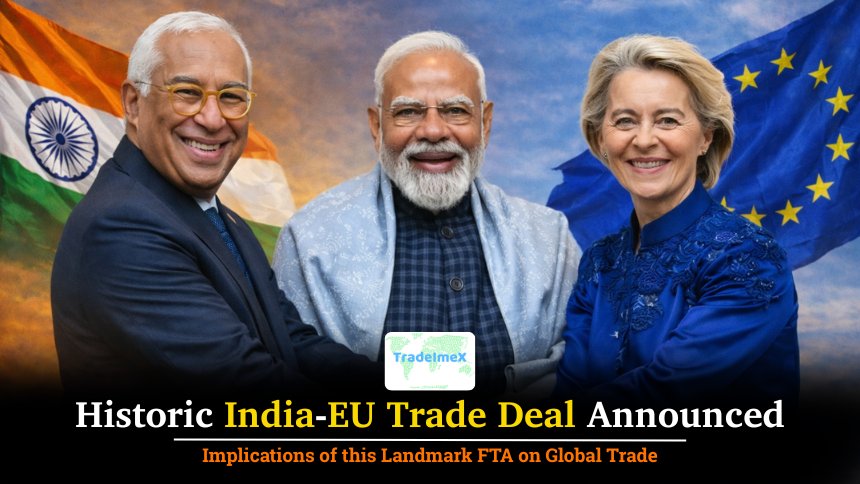
India–European Union Trade Deal: A New Era of Strategic Partnership
The proposed trade agreement between India and the European Union (EU) is shaping up to be one of the most significant economic partnerships of the decade. Often referred to as the India–EU Free Trade Agreement (FTA), this deal aims to boost bilateral trade, enhance market access, and strengthen geopolitical ties between two major global players.
Why the India–EU Trade Deal Matters
India and the EU already share a strong economic relationship. The EU is one of India’s largest trading partners, while India is a key emerging market for European businesses. However, trade barriers, regulatory differences, and tariffs have historically limited the full potential of this partnership.
The new trade deal aims to:
- Eliminate or reduce tariffs on goods
- Simplify regulatory standards
- Increase investment flows
- Strengthen supply chain resilience
With global trade dynamics shifting, both sides see this agreement as a strategic necessity rather than just an economic opportunity.
Key Areas of Focus
1. Goods and Tariffs
One of the central components of the deal is tariff reduction. India seeks better access for its textiles, pharmaceuticals, and agricultural products, while the EU aims to reduce tariffs on automobiles, wines, and luxury goods.
2. Services and Investment
India is pushing for easier mobility for skilled professionals in sectors like IT and healthcare. The EU, on the other hand, is focused on investment protection and transparency in business regulations.
3. Digital Trade and Data Protection
Digital trade is becoming increasingly important. The EU’s strict data protection laws, such as the General Data Protection Regulation (GDPR), are a key discussion point, especially for Indian IT companies.
4. Sustainability and Climate Goals
Both parties are committed to environmental standards. The EU wants strong climate commitments aligned with the Paris Agreement, while India seeks flexibility to support its development goals.
Opportunities for Businesses
- Pharmaceuticals: India’s generic drug manufacturers can expand into European markets.
- Automobiles: European carmakers may gain better access to India’s growing middle-class market.
- Technology & IT: Increased cooperation in digital services and innovation.
- Renewable Energy: Joint ventures in solar and green energy projects.
Challenges in Negotiation
- Tariff disagreements, especially in sensitive sectors like agriculture and automobiles
- Data security concerns due to differing regulatory frameworks
- Labor and environmental standards, where the EU maintains stricter norms
- Intellectual property rights, particularly in pharmaceuticals
Geopolitical Significance
Beyond economics, this deal has strong geopolitical implications. As global supply chains shift away from overdependence on single regions, India and the EU are positioning themselves as reliable partners.
This partnership also reflects a broader alignment in democratic values, rule-based trade systems, and sustainable development goals.
What Lies Ahead
Both India and the EU have expressed commitment to concluding the agreement in the near future. If finalized, the India–EU trade deal could:
- Increase bilateral trade by billions of dollars
- Create jobs across industries
- Strengthen global economic stability
- Position India as a key manufacturing and export hub
Conclusion
The India–EU trade agreement is more than just a trade deal—it’s a strategic partnership that could redefine economic relations between two major regions. While challenges remain, the potential benefits far outweigh the obstacles.
For businesses, policymakers, and investors, this is a development worth watching closely. If successfully implemented, it could unlock a new chapter of growth, innovation, and global collaboration.